
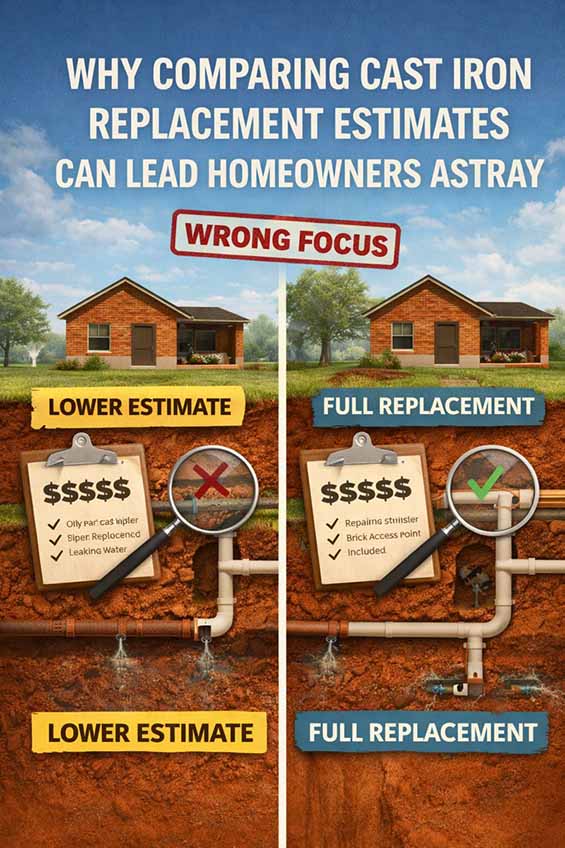
When homeowners start collecting estimates for pipe replacement services, it’s natural to compare prices. But with old cast iron pipe replacement, comparing numbers without understanding the scope of work can lead to costly mistakes.
Cast iron systems are unique to every home. Fixture locations, pipe routing, depth, tunneling requirements, yard access, and city connection points all affect what’s required. Two homes of similar size can have vastly different needs for underground pipe replacement.
One estimate may include replacing all under-slab and yard piping, while another may only address part of the system. Some contractors include sprinkler repairs, brick access, or permitting by default — others do not. Without understanding what’s actually included, a lower price may simply represent less work, not better value.
This is especially important with a cast iron to PVC conversion. Proper installation requires correct slope, transitions, and long-term reliability. Cutting corners underground often leads to repeat failures, future repairs, or redoing the work entirely.
Homeowners should focus less on the number and more on the plan. Ask what will be replaced, how access will be handled, how backfill is performed, and whether permits are included. A realistic cast iron pipe replacement cost reflects the full scope needed to do the job correctly once.
Comparing estimates can be confusing. Contact In-House Plumbing Company if you want help understanding what you’re really being quoted for.


Schedule Service
Need Financial
Assistance?

Get Sensible Solutions Today
Say goodbye to water or sewer leak issues, especially ones under your foundation, by putting our plumbing company to work for you. We offer timely, sensible solutions and restore peace of mind without significantly affecting your property or budget. Contact In-House Plumbing Company today to schedule an appointment.